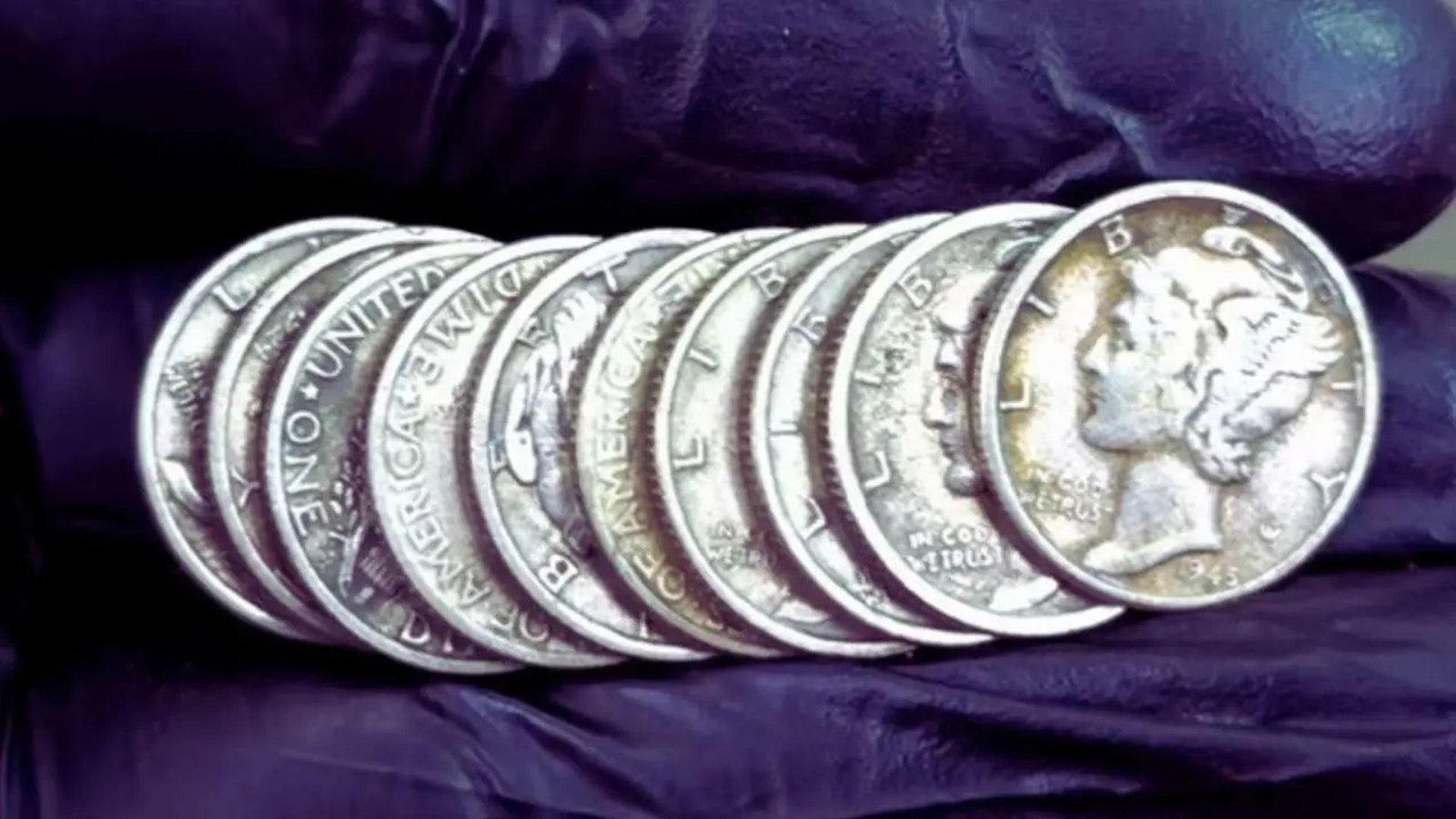
Have you ever checked the old coins sitting in a jar or drawer at home? One small silver dime from decades ago might be worth thousands or even hundreds of thousands of dollars. These are Mercury dimes, also called Winged Liberty Head dimes. The U.S. Mint made them from 1916 to 1945. Most are worth only a few dollars for their silver content, but a few rare ones sell for huge amounts at auctions.
A Quick Look at the Mercury Dime
Artist Adolph A. Weinman designed this coin. The front shows Lady Liberty wearing a winged cap. People thought it looked like the Roman god Mercury, so the nickname stuck. The back has a bundle of sticks (fasces) with an olive branch. These dimes contain 90% silver. After 1945, the Mint switched to the Roosevelt dime. Collectors still love Mercury dimes for their beauty and history from World War I through World War II.
Not every Mercury dime is valuable. Rarity, the mint mark (a small letter showing where it was made), condition, and special features decide the price. The mint mark sits on the reverse near the bottom of the fasces. “D” means Denver, “S” means San Francisco, and no letter means Philadelphia. Coins with sharp details, especially “Full Bands” (clearly separated horizontal lines on the fasces), can jump in value. Always get rare coins checked by a trusted grading service like PCGS or NGC.
Why Some Mercury Dimes Are Worth a Fortune
Low mintage numbers, heavy use in daily life, and minting mistakes create rarity. A common worn Mercury dime might bring only its silver melt value of a few dollars. Key dates and high-grade examples with Full Bands can sell for life-changing money. Here are the top five most valuable ones based on recent auction results and collector demand.
Top 5 Most Valuable Mercury Dimes
| Rank | Coin | Why It’s Rare | Approximate Value Range (2026) |
|---|---|---|---|
| 1 | 1916-D | Lowest mintage in the series (only 264,000 made) | $1,500 (worn) to $200,000+ (top condition Full Bands) |
| 2 | 1942/1 Overdate | Famous error where the date shows “1” under the “2” | $250 (worn) to $120,000 (high-grade Full Bands) |
| 3 | 1921 & 1921-D | Low production after World War I | $60–$100 (worn) to $50,000+ (uncirculated Full Bands) |
| 4 | 1919-D Full Bands | Hard to find with sharp strike details | $15–$60 (worn) to $150,000+ (gem Full Bands) |
| 5 | 1931-S or other high-grade condition rarities | Excellent condition examples of scarcer dates | $25,000 to $270,000+ for the finest pieces |
1. 1916-D Mercury Dime
This is the king of the series. Denver made far fewer than the other mints that first year. Even a heavily worn one often starts around $1,500. Sharp, uncirculated examples with Full Bands have sold for over $200,000. Counterfeits exist, so authentication is a must.
2. 1942/1 Overdate
During wartime, workers reused an old die. You can see part of a “1” under the “2” in the date. Both Philadelphia and Denver versions exist. Collectors pay strong prices for clear examples, especially in high grades.
3. 1921 and 1921-D
Silver shortages after World War I kept production low. These semi-key dates are tough to find in nice condition and command solid premiums.
4. 1919-D with Full Bands
Millions were made, but almost all saw heavy circulation. Finding one with fully separated bands in top grade is extremely difficult and drives prices into six figures.
5. Other Condition Rarities (such as 1931-S or 1938-S in superb grades)
Some common-date coins become stars when they survive in near-perfect condition with Full Bands. One 1938-S set a series record near $364,000.
How to Check If You Own a Valuable Mercury Dime
- Look at the date first.
- Find the mint mark on the reverse near the fasces.
- Examine the coin under good light for clear bands, doubled details, or date errors.
- Never clean the coin—cleaning lowers value.
- Take promising finds to a reputable coin dealer or send them for professional grading.
FAQ – Frequently Asked Questions
Are all Mercury dimes valuable?
No. Most circulated ones are worth only a few dollars for the silver. Only key dates, errors, and high-grade pieces bring big money.
What does “Full Bands” mean?
It means the horizontal bands across the fasces on the reverse are fully separated with no bridging. This sharp strike adds a large premium.
Where can I sell a rare Mercury dime?
Major auction houses, trusted coin dealers, or online platforms after professional grading give the best results.
How can I tell a real 1916-D from a fake?
The “D” mint mark position and style matter. Many fakes start as common 1916 Philadelphia coins with an added mint mark. Always get expert verification.
What is the silver value of a regular Mercury dime?
Around $5–$8 depending on the current silver price, but rare ones sell for far more as collectibles.
Conclusion
Mercury dimes prove that everyday objects from the past can hide surprising value. The 1916-D remains the most famous, but overdates, low-mintage years, and superb condition examples also reward careful collectors. Take a few minutes to check old coin jars, inherited collections, or loose change. You might discover a small piece of history worth a fortune. Always research current market values and seek professional advice before buying or selling. Happy hunting—and may your next dime be a rare one!